

Night Light
Aug 26, 2020
Back in 2016, I had been waiting for a good opportunity to take some night sky images at Kinstone Circle near Fountain City, Wisconsin. Every month since April I would wait for the new moon, hoping that one of the days surrounding the new moon would have cloudless skies and decent weather. It was a long wait, but I had good luck twice, once at the beginning of Labor Day weekend, and again at the end of the month with a second new moon (the so-called “black moon”).
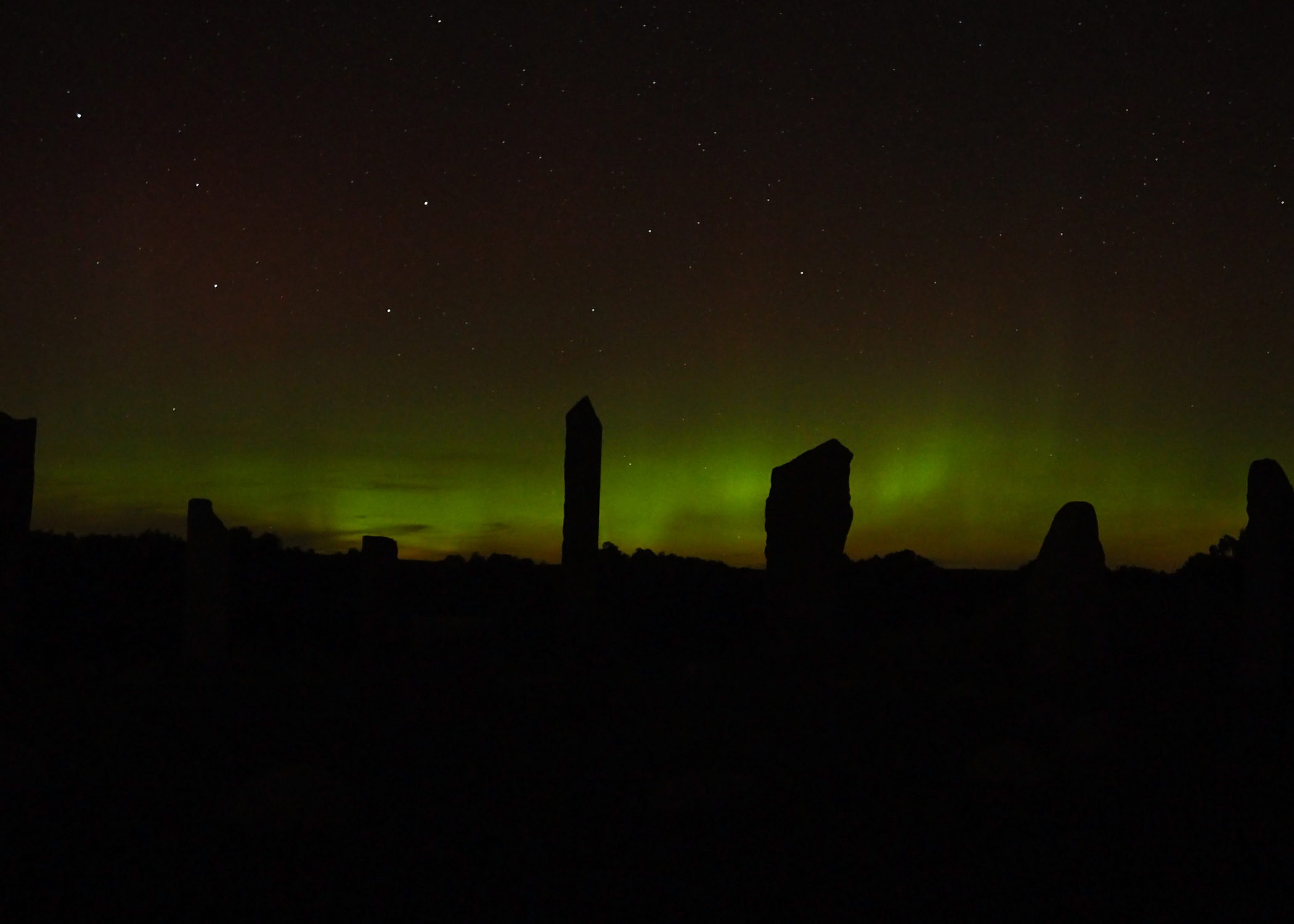
At the first new moon, I arrived at Kinstone around 10:00pm. I set up my tripod with a view toward the northern sky. My eyes adjusted to the dark reasonably quickly, and I felt the stars above me were fairly bright and crisp. But the camera was telling a different story. My first few frames were a bit washed out, which I took to be light pollution from nearby Winona, Minnesota (off to the west from where I was positioned.) However, the offending light had a telltale greenish hue. It occurred to me I was looking at the northern lights (Aurora Borealis), which had been highly active the night before, according to news reports. I adjusted my camera settings to try to optimize the appearance. With the stones of Kinstone silhouetted against the night sky, and the Big Dipper visible in the upper left, I achieved the following result:
The image I really wanted would have to wait for another 28 days. I returned to Kinstone on October 2nd, a few days after the “black moon”. My goal was to fulfill a vision expressed by our late friend, Jon Dannehy, who passed away in November, 2015. Jon introduced us to Kinstone, and he often spoke about how cool it would be to take a long exposure focused on the North Star, with the stars creating a rotating “star trail”. For those who haven’t visited Kinstone previously, there is a stone at the northern-most compass point of the circle that you can use as a guide to locate the North Star. When Jon imagined his star trail photo, I’m sure he wanted to feature this stone. Jon passed away from cancer before either one of us could complete his photographic quest. This night, I was determined to bring his concept to life. I set up my tripod, and took a series of 15-second exposures – 90 images in all – over a span of 45 minutes. I used a flashlight to illuminate the stone on every third exposure. Once I was back home, I used the computer to sew the 90 images together to create the star trail effect. I was pleased with the result, and I’ve dedicated the image to our friend, Jon.
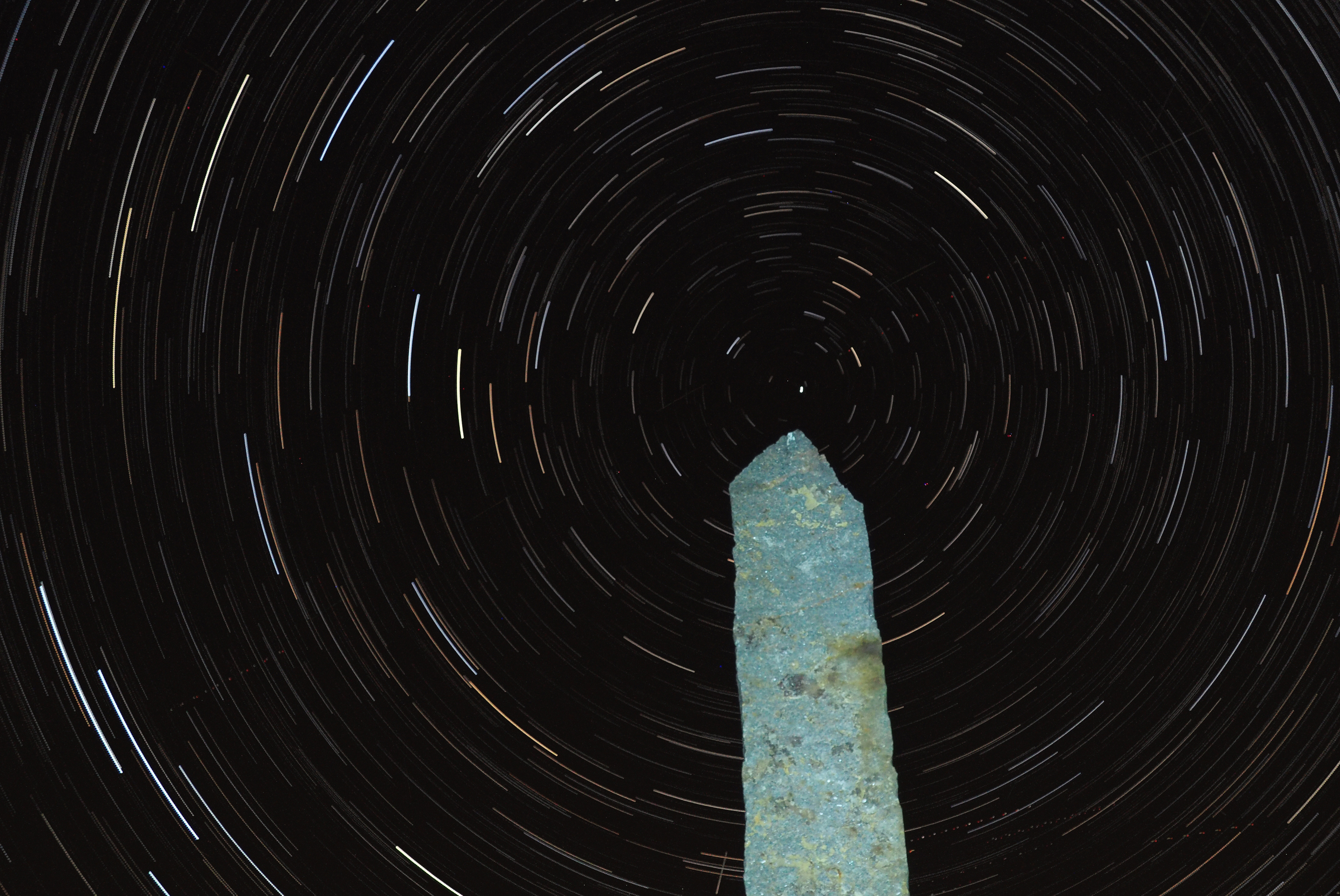
I love how the variations in star colors comes out in this image, something the unaided eye often overlooks.
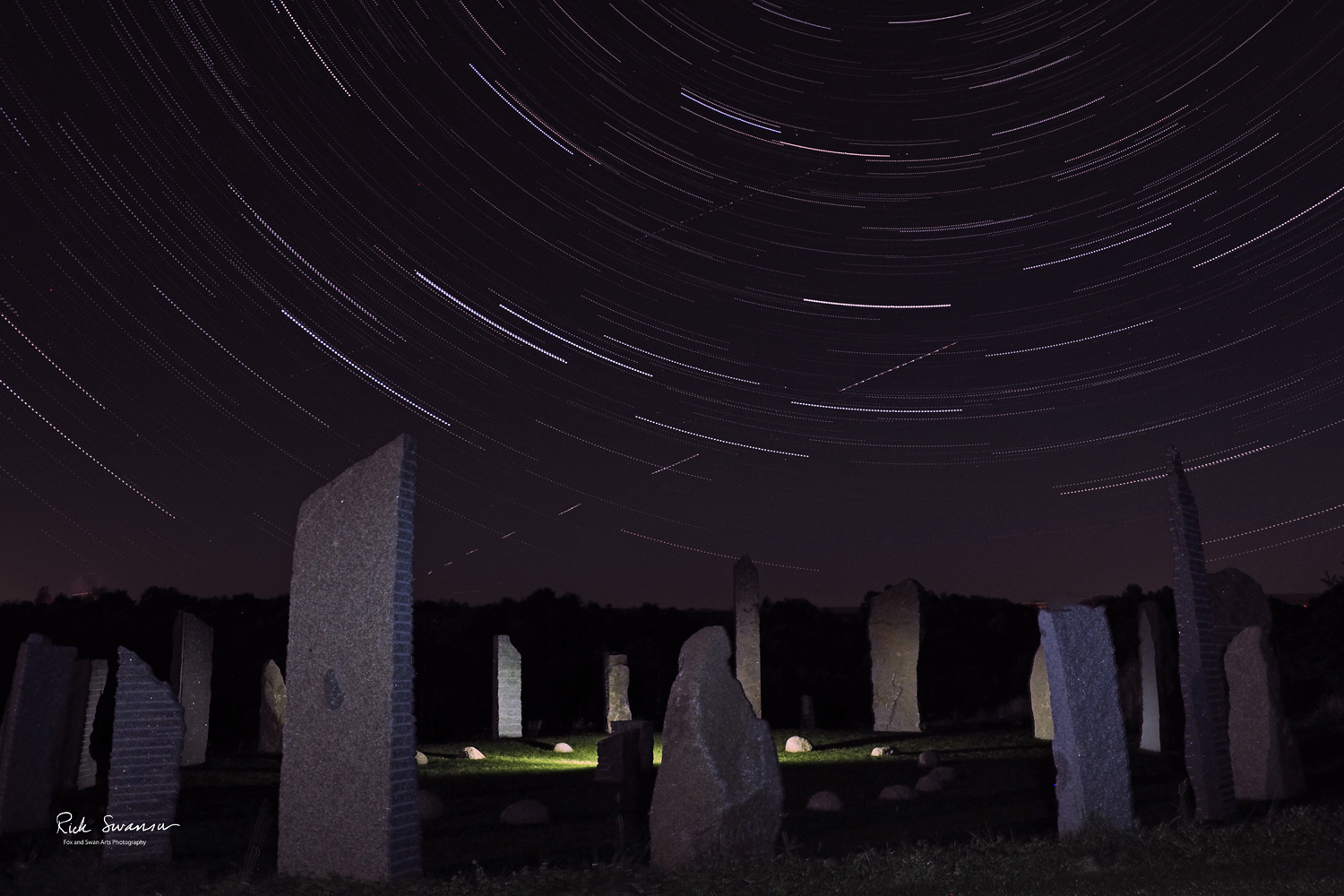
Kinstone proprietor Kristine Beck joined me at the circle and we decided to try a light painting experiment. Light painting as I learned it is when you take a long exposure of a scene at night in the dark, and then use a light source like a flashlight to “paint” your subject with light. I repositioned the camera to a location outside the stone circle. Kristine sat in the middle of the circle with a high-powered flashlight. When I opened the shutter, she light-painted the inside of the circle while I painted the outside. The result was striking in a “close encounters” kind of way. Combined with taking multiple images over time, we came up with this fun startrail photo.
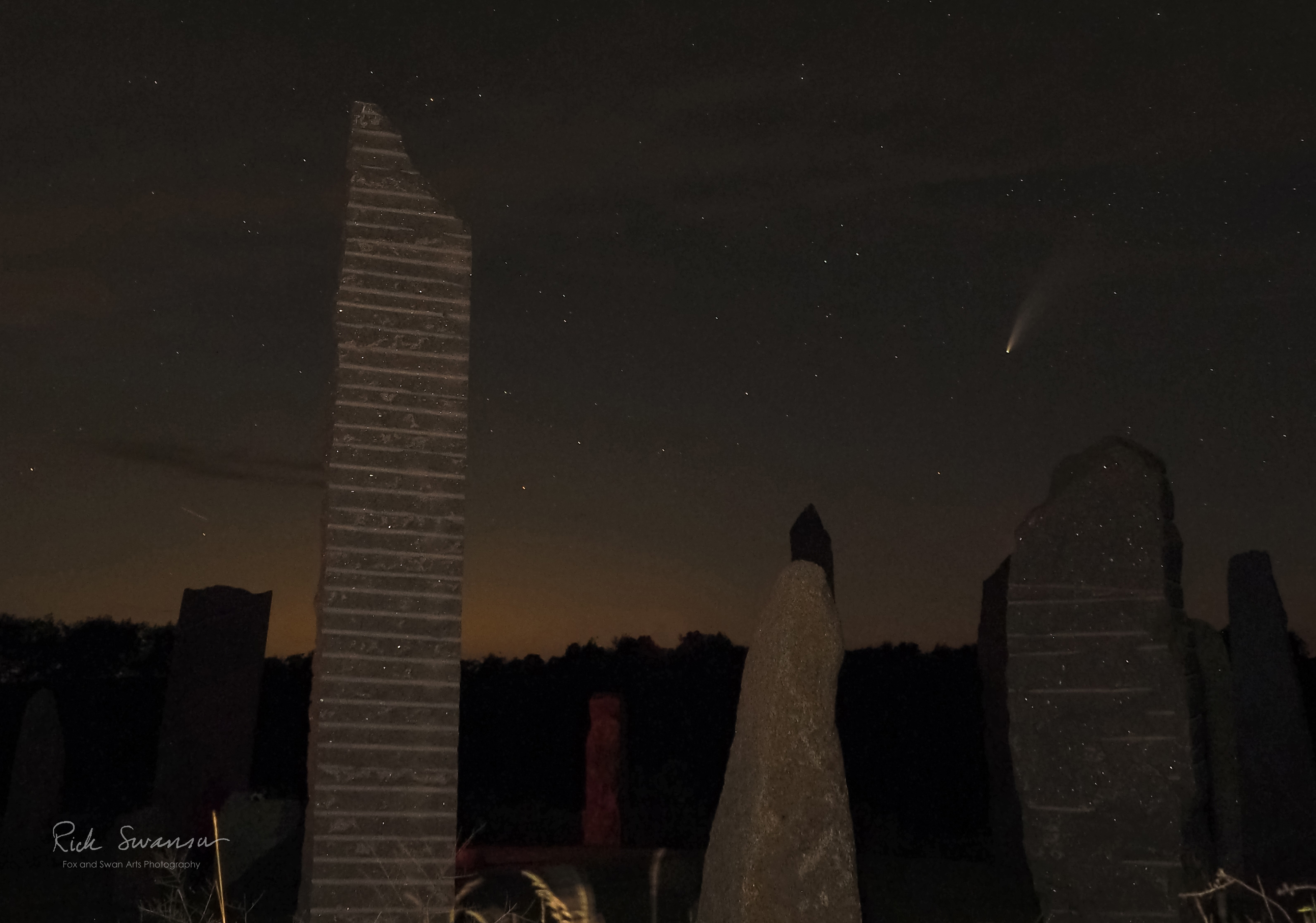
More recently, the summer of 2020 brought comet Neowise, so that meant another excuse to run out to Kinstone for more night sky adventures. Again, a little light painting helped bring out the stones, and you can make out the smudge of the comet above them.
I hope you enjoy these images of Kinstone at night!